

FAQ
What level is the All-round aircraft assembler training programme?
The All-round aircraft assembler programme is a Level 3 MBO vocational training programme. It is a two-year BBL programme, BBL stands for Beroeps Begeleidende Leerweg. This means that at GKN Fokker you mainly learn by working. You spend four days per week gaining practical experience at GKN Fokker and one day per week attending theoretical classes at college. This combination allows you to gain real work experience from day one and learn the profession directly in practice.
What does the weekly schedule look like during this BBL programme?
During the BBL programme, you work four days per week at GKN Fokker and attend college one day per week for theoretical lessons. These lessons take place at Da Vinci College in Dordrecht or Alfa College in Hoogeveen. The weekly structure is designed so that you can immediately apply theory in practice.
Which subjects are taught during the programme?
During the programme, you follow several subjects that closely relate to aircraft assembly work, including:
- Materials
- General aircraft technology
- Structural engineering
- Reading technical drawings
- English
- General aviation knowledge
The theoretical subjects closely align with the work carried out in the workshop.
What does a school day at Da Vinci College look like?
At Da Vinci College in Dordrecht, you attend classes one day per week, covering both general subjects and aircraft-specific modules. The school day usually starts slightly later than a regular working day and often finishes earlier. The purpose of this day is to strengthen your technical foundation so you can directly apply this knowledge during your practical days at GKN Fokker.
What does a school day at Alfa College look like?
At Alfa College in Hoogeveen, you attend college one day a week. The school day usually starts around 8:30 am and consists of a combination of aircraft construction theory and general subjects (AVO).
The first part of the day focuses on aircraft-related theory. You learn about metalworking techniques, materials and general aircraft knowledge. In the afternoon, you follow the AVO subjects, depending on any exemptions you may have based on previously obtained diplomas.
By the end of the first year, most AVO subjects are completed. In the second year, the focus is mainly on technical English. The theory lessons are alternated with interactive learning methods and practical activities, helping you to better understand and apply the subject matter.
What is the balance between theory and practice in the BBL programme?
The BBL programme consists of approximately 30% theory and 70% practical training. At the beginning, the focus is mainly on theory, as you first need to learn how to read technical drawings, understand which materials are used and how aviation-specific fastening methods work.
You then gradually apply this knowledge in practice at GKN Fokker. Throughout the year, you receive additional theoretical instruction, which you immediately apply during practical assignments and internships. This combination ensures a solid foundation and rapid development of technical skills.
How does the learning pathway of the All-round aircraft assembler programme work?
The learning pathway starts with the basics: theoretical lessons on aircraft construction and safety instructions. You then learn to work with different materials, tools and fastening methods. The programme follows a learning-by-doing approach, meaning theory is directly linked to practice.
In addition, you complete four to five internship periods of approximately eight weeks, each time working in a different department within GKN Fokker. This allows you to develop broad technical skills and discover which part of aircraft assembly suits you best.
What exactly do you learn as an aircraft assembler during this programme?
During the programme, you learn, among other things, how to:
- Work with composite materials
- Apply precision assembly techniques
- Carry out quality inspections
- Interpret technical drawings
- Work safely in accordance with aviation standards
- Work with aluminium
- Maintain documentation accurately and on time
What does the All-round aircraft assembler training programme cost?
The programme is free of charge. GKN Fokker pays for the entire training programme, including tuition fees and all required learning materials such as books and workwear. In addition, you receive a salary during your training: 100% of the statutory minimum youth wage in the first year and 110% in the second year, subject to good performance.
This allows you to learn and earn at the same time, without unexpected study costs. For many parents and students, this is a major advantage compared to regular vocational programmes where tuition and book costs apply.
Where do you complete your internships during the programme?
All internships take place within GKN Fokker. During the programme, you gain experience across multiple departments, giving you a complete picture of the different aspects of aircraft assembly. You learn to work with a variety of materials, tools and assembly techniques, and discover which type of work suits you best.
Each internship period lasts approximately eight weeks, and you are guided by experienced professionals who support you step by step. By rotating between departments, you develop broad technical skills and grow into an all-round aircraft assembler.
How much guidance do you receive?
During the programme, you are assigned a personal practical supervisor. This supervisor teaches you skills step by step, provides feedback, monitors your progress and maintains contact with the college. This ensures you always know where you stand and what you are working towards.
What is the working atmosphere like at GKN Fokker during the programme?
The working atmosphere at GKN Fokker is positive, safe and supportive. You start together with other new students, which helps build a close-knit group quickly. You support each other with practical assignments, theory and keeping the workplace clean and organised at the end of the day. Because everyone shares the same goal (learning, growing and ultimately building aircraft components), a strong team spirit develops. Many students experience the environment as safe, friendly and motivating.
Is the workload too high for young students?
No. The workload is tailored to MBO students. You start with simple tasks and gradually progress to more complex work. Everything takes place under the supervision of experienced colleagues. Safety and a calm, structured learning process are always prioritised.
Do you receive a salary during the BBL programme?
Yes, you receive a salary throughout the BBL programme. In the first year, you earn 100% of the statutory minimum youth wage, and in the second year this increases to 110%, subject to good performance. This allows you to learn a profession while building financial independence. In addition, all school-related costs and learning materials are covered by GKN Fokker, meaning you do not incur study costs as you would in regular vocational programmes.
How do holidays and leave work during the programme?
You receive 40 days of leave per calendar year. Holidays and leave are always arranged in consultation with your practical supervisor. Important to note:
- As a BBL student, you are not automatically off during school holidays.
- Mandatory training days and exams must be attended.
- If an exam or mandatory school activity falls on a workday, this day can be taken without leave and made up later. In consultation with your supervisor, your usual school day may be replaced or you may be given time off work.
- The summer holiday lasts approximately two to three weeks.
How can you apply for the programme?
You start by registering for an open day or open evening. During this event, you receive information about the programme and get to know the workplace. You then complete a technical suitability test, which assesses your insight and motivation. If you pass the test, you are invited for an interview. When both you and GKN Fokker see a good match, you are officially enrolled in the BBL programme All-round aircraft assembler.
How does the technical suitability test work?
The technical suitability test is designed to determine whether the programme suits you. The test assesses your technical aptitude, spatial awareness, fine motor skills, logical reasoning and interest in technology and aviation. You do not need prior experience; motivation and natural aptitude are more important than existing knowledge. The results provide both you and GKN Fokker with a clear picture of your starting level and potential within aircraft assembly.
Do you need to be good at maths or physics for this programme?
You do not need to excel in maths or physics to start this programme. A basic level is sufficient, and support is provided during the course. An interest in technology is particularly helpful, as it supports understanding of structural engineering, materials science and aircraft construction principles.
English is also important in aviation, as many technical documents, safety regulations and work instructions are written in English. You do not need to be fluent, but you should be willing to learn and use English. English lessons are included in the programme and you will be supported step by step.
Can I apply if I have a VMBO-diploma?
You can apply for the programme if you hold at least a VMBO-kader diploma. In some cases, this requirement may be adjusted in consultation with the vocational college (ROC). In addition to your prior education, we also consider your motivation, commitment and technical interest. Because the programme is highly practice-oriented, students with the right attitude often perform very well.
Is the programme safe and how is safety ensured?
Yes, the programme is safe. Safety is an absolute priority within the aerospace industry. Students receive extensive safety instructions and always work under the supervision of experienced professionals.
In addition, students regularly complete mandatory safety training to keep their knowledge up to date. All activities are carried out in accordance with strict aviation and safety standards, ensuring a safe learning environment.
What are the working hours during the BBL programme?
Working hours during the BBL programme largely follow GKN Fokker’s regular daytime shifts, meaning you work during the day. There are no night shifts or irregular working hours for students. This provides structure, routine and a healthy balance between learning, working and free time.
How large are the class groups during the programme?
Class groups are deliberately kept small to ensure personal attention. Both practical and theoretical groups consist of a maximum of 12 students, allowing plenty of room for guidance, questions and individual support.
Is the programme suitable for women?
Yes, the programme is absolutely suitable for women. The aerospace industry is becoming increasingly diverse, and many women demonstrate strong precision, accuracy and technical skills: key qualities in this profession.
What are the chances of getting a job after completing the programme?
The chances of employment after completing the programme are very high. Demand for technical professionals in the aerospace industry continues to grow. Many students receive job offers during their training. GKN Fokker trains with the aim of offering successful students a permanent position. Strong performance leads to excellent career prospects.
Are there opportunities to progress after completing the programme?
Yes, there are multiple progression opportunities. Many graduates move into roles such as Senior Allround Aircraft Assembler, Composite Specialist, Quality Inspector or Production Planner. You can also continue your studies at MBO Level 4, pursue a technical bachelor’s degree, or further specialise within GKN Fokker through internal training. The programme provides a solid foundation for a long-term career in engineering or aerospace.
What do you build at GKN Fokker during the programme?
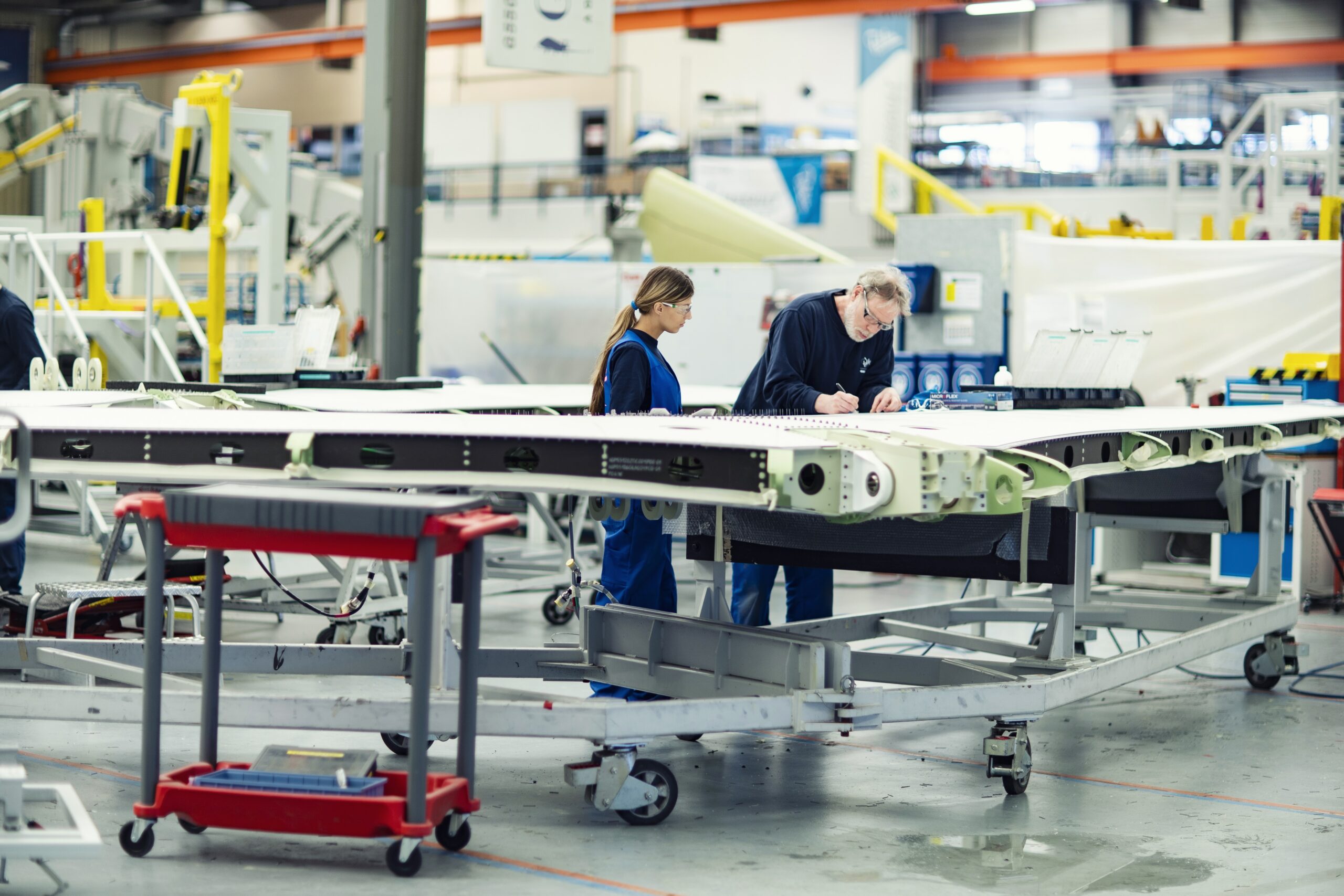
At GKN Fokker, you work on real aircraft components. You build or assist in assembling parts such as wings, tail sections, doors and composite structures for both civil and military aircraft. This means you directly contribute to aerospace projects used worldwide.
Do you work on real aircraft during the programme?
Yes, during the programme you work on components that are used in helicopters, fighter jets and passenger aircraft. All work is carried out under the supervision of experienced aircraft builders and according to strict aerospace quality standards. From the start, you contribute to components that actually take to the skies.
Which tools do you learn to use during the programme?
During the programme, you learn to work with a wide range of aerospace tools, including specialist aviation tools, precision tools, riveting machines, composite tools, torque wrenches and measuring instruments. You learn to use these tools safely and accurately, preparing you for professional work in the aerospace industry.
What if I have little technical experience?
If you have little technical experience, that is not a problem. The programme is designed for beginners and everything is taught step by step. More important than experience are qualities such as curiosity, accuracy, motivation and enjoyment of hands-on work. Practical supervisors support you from the basics until you can work independently on aircraft components.
What if I have dyslexia or AD(H)D?
Many students with dyslexia or AD(H)D perform very well in a BBL environment. The practical, step-by-step learning approach often suits them well. During the programme, we look at what you need to succeed and take any required additional support into account.
Is the programme also suitable for career changers?
Yes, career changers can also apply for the programme. We carefully assess whether the BBL programme suits the individual and the learning environment. Most students are young and come directly from VMBO, so in practice a guideline age of up to approximately 27 years is used.
For career changers without a VMBO diploma, we assess work and thinking level, motivation and technical aptitude. Together, we determine whether the programme is a suitable match.
Can you continue studying in aerospace after completing the programme?
Yes, you can continue your studies after completing the programme. You can progress to MBO Level 4, a technical bachelor’s degree, or further specialise within GKN Fokker through internal training and courses. The programme provides a strong foundation for a future in the aerospace industry or other technical sectors.
Ask your question
Can’t find your question here? Let us know via the form and we will contact you shortly.
"*" indicates required fields